
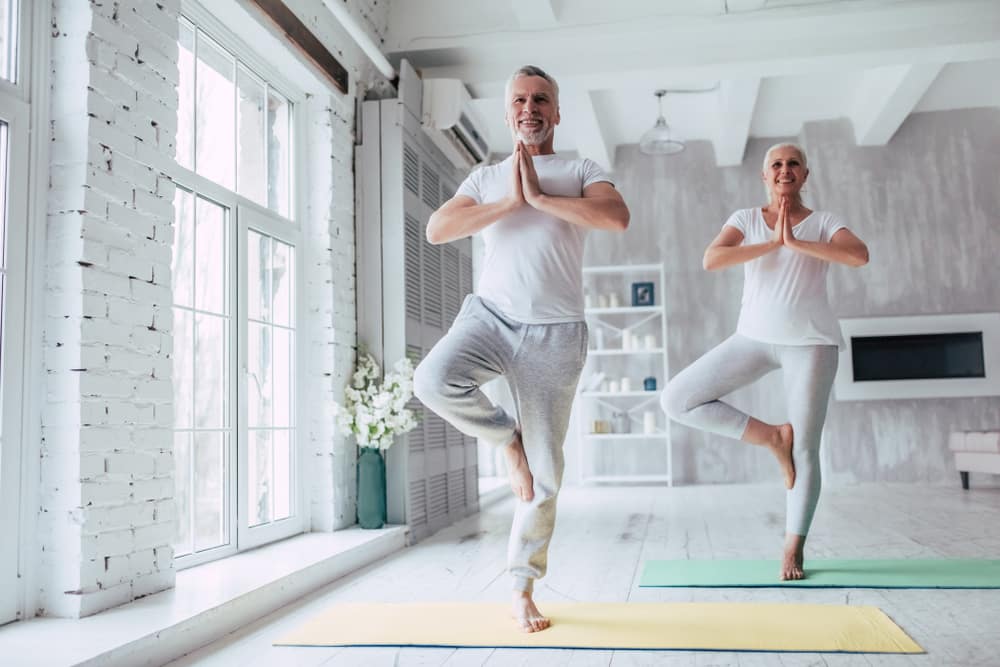
Along with a healthy diet, exercise for seniors is also a vital part of enhancing your loved one’s physical and emotional health and wellbeing. In this article, we will look at why exercise is essential, how much is recommended, and provide some examples of activities and exercises that will ultimately help your loved one live a happier and healthier life.
Why is physical activity important for seniors?
Physical activity has many benefits for older people. These include helping to:
- Control their weight, cholesterol, blood pressure, diabetes, and joint and bone problems like arthritis.
- Reduce their risk of stroke, heart disease and some cancers.
- Manage pain.
- Maintain and increase joint movement.
- Reduce the risk of injury from falls — a significant concern with ageing.
How much physical activity do seniors need?
In terms of the recommended amount of exercise for seniors, the amount of physical activity your loved one should do each week depends on their age and level of health. To stay healthy or improve health, older adults need to try to be as active as possible every day in as many ways as possible.
Some activity — however light — is better than none at all, so they should aim to do something regardless of their age, abilities, weight or health problems. They should also try to limit the time they remain sedentary, ie. reading, listening to music or watching TV.
In terms of exercise goals for seniors, adults aged 65 or older who have no health conditions that limit their mobility and are generally fit should try to do at least thirty minutes of moderate-intensity physical activity on most, preferably all days. Physical activity should also target four main areas — fitness, strength, flexibility and balance.
Depending on their individual circumstances, there are also a number of different types of exercise that can be undertaken, including aerobic and muscle-strengthening activities.
What is moderate-intensity aerobic activity?
Moderate-intensity aerobic activity means your loved one’s body is working hard enough to raise their heart rate and break a sweat. One easy way to tell if they are working at a moderate intensity is if they can still talk, but can’t sing the words to a song!
Examples of activities that require moderate effort for most seniors include:
- walking fast
- doing water aerobics
- ballroom and line dancing
- riding a bike on level ground or with a few hills
- playing tennis
- pushing a lawnmower
- canoeing
- volleyball
It’s worth noting, however, that daily activities such as cooking, shopping or housework don’t count towards a daily 30 minutes of moderate-intensity exercise. This is because the effort required isn’t hard enough to increase their heart rate.
What is vigorous-intensity aerobic activity?
Vigorous-intensity aerobic activity means they are breathing fast and hard, and their heart rate has gone up quite a bit. If they are exercising at this level, they won’t be able to say more than a few words without pausing for a breath. And of course, they should stop if they start to feel unwell.
The Australian Physical Activity Guide for Older Australians doesn’t recommend seniors exercise to this level, but if they have enjoyed a lifetime of vigorous physical activity, they should carry on doing it in a way that suits them now, provided they stick to recommended safety guidelines and procedures.
What is muscle-strengthening activity?
Muscle-strengthening exercises are typically counted in sets and repetitions. A repetition is one complete movement of an activity, like doing a sit-up or lifting a weight, and a set is a group of repetitions.
For your loved one to gain health benefits from muscle-strengthening activities, they should do them to the point where they find it hard to complete another repetition. They should make time to do specific strength exercises two or three times a week and build some into their everyday activities if possible.
There are many ways your loved one can strengthen their muscles, whether they are exercises for seniors at home or in exercise classes for seniors, and examples include:\
- Moving or carrying heavy loads like groceries
- Activities that involve jumping and stepping like dancing
- Heavy gardening like shovelling or digging
- Exercises that use their body weight for resistance like sit-ups and push-ups
- Yoga
- Lifting weights
Strength exercises for seniors
Older people can do many strength exercises in the comfort of their own homes. Here are some examples of some simple ones for those who are just getting started.
Abdominal contractions
This exercise will help your loved one strengthen their abdominal muscles. They:
- Start with lying on the floor on their back with their knees bent.
- Take a deep breath, tighten their abdominal muscles, hold for three breaths and then release the contraction.
- Repeat ten times if possible.
Wall pushups
This exercise will help your loved one increase strength in their shoulders and chest. They:
- Begin by standing about a metre away from a wall and face it with their feet shoulder-width apart.
- Lean forward and place their hands flat on the wall in line with their shoulders. Their body should be in a “plank” position, with their spine straight (not arched or sagging).
- Then lower their body towards the wall and push back.
- Repeat ten times if possible.
Pelvic tilts
This is one of the best back strengthening exercises for seniors. They:
- Start by taking a deep breath, tightening their buttocks and tilting their hips slightly forward.
- After holding for a three-count, they tilt their hips back and hold for three seconds.
Repeat eight to twelve times if possible.
Shoulder blade squeeze
This is one of the great chair exercises for seniors that will help them strengthen their postural muscles. They:
- Start by sitting straight up in a chair, resting their hands in their lap and then squeeze their shoulder blades towards one another. The focus should be on keeping their shoulders down rather than hunched up towards their ears.
- Hold the position for three seconds.
- Repeat eight to twelve times if possible.
Toe taps
This is one of the great leg strengthening exercises for seniors that focuses on the lower legs and keeps blood circulating in their legs. They:
- Start by sitting in a chair and keeping their heels on the floor.
- Then lift their toes high enough so they can feel the muscles along their shin working.
- Repeat twenty times if possible.
Heel raises
This exercise will help your loved one strengthen their upper calves. They:
- Start by sitting in a chair, keeping their toes and the balls of their feet on the floor and lifting their heels.
- Repeat this twenty times if possible.
Knee lifts
This exercise will help your loved one strengthen their thighs. They:
- Sit in a chair with their arms resting but not pressing on the armrests.
- Then contact their right quadriceps muscles and lift their leg. Their knee and the back of their thigh should be five to seven centimetres off the seat.
- Pause for three seconds and then slowly lower their leg.
- Repeat eight to twelve times if possible, and then repeat the exercise with the opposite leg.
Shoulder and upper back stretch
As the name suggests, this exercise will help your loved one strengthen their shoulders and upper back. They:
- Start by bending their right arm and raising it so that their elbow is chest level and their right fist is near their left shoulder.
- Place their left hand on their right elbow, gently pull their right arm across their chest, and hold for twenty to thirty seconds.
- Repeat with the opposite arm.
Ankle rotations
This exercise will help your loved one strengthen their calves. They:
- Sit in a chair and lift their right foot off the floor and slowly rotate it five times to the right and then five times to the left.
- Repeat with their left foot.
Marching
The following two exercises are ideal for those seniors that use a walker. They:
- Stand with both hands on their walker and lift their left knee as high as possible.
- Then lower it and lift their right knee.
- Then alternate between sides for a total of twenty repetitions.
Heel-toe raises
- Start by standing with both hands on their walker, and then raise both of their heels and balance on the balls of their feet for three seconds.
- Then shift their weight onto their heels and raise their toes.
- Repeat ten to twenty times if possible.
Stretching exercises for seniors
If your loved one gets into the habit of stretching every day, they will improve their range of motion and make activities more comfortable.
Neck stretch
This exercise will help your loved one relieve tension in their neck and upper back. They:
- Start by standing with their feet flat on the floor, shoulder-width apart, with their hands relaxed at their sides.
- Tip their head forward or backward as they turn their head slowly to the right and stop when they feel a slight stretch.
- Hold this position for ten to thirty seconds.
- Repeat three to five times if possible.
Upper back stretch
This exercise will help your loved one relieve tension in their shoulders and upper back. They:
- Start by sitting in a firm chair and placing their feet flat on the floor, shoulder-width apart.
- Then hold their arms up and out in front of them at shoulder height with their palms facing outward, and the backs of their hands pressed together. Their shoulders should be relaxed, so they aren’t scrunching up near their ears.
- Then reach their fingertips out until they feel a stretch (their back will move away from the back of the chair) and hold for ten to thirty seconds.
- Repeat three to five times if possible.
Balance exercises for seniors
Accidental falls are unfortunately a significant injury for many older adults, which is why balance exercises in their exercise regime are essential. This will help them walk on uneven surfaces without losing their balance and they should be done every day if possible.
Weight shifts
- They start with standing with their feet hip-width apart, their weight distributed evenly on both feet, and their hands relaxed at their sides.
- Place a sturdy chair in front of them in case they need to grab it for balance.
- Then shift their weight onto their right side and lift their left foot five or so centimetres off the floor.
- Hold this position for ten seconds, eventually working up to thirty seconds.
- Then return to the starting position and repeat with the opposite leg.
- Repeat three times if possible.
Rock the boat
- Start by standing with their feet hip-distance apart, and then lift their arms and extend them out to the sides.
- Lift their left foot off the floor and bend their knee to bring their heel towards their bottom.
- Hold the position for up to thirty seconds and then repeat on the opposite side.
Repeat three times on each side if possible. - Core exercises for seniors
Tightrope walk
The following two simple exercises will help your loved one improve their posture, balance and core strength. They:
- Start by lifting their arms and extending them out to the sides.
- Then walk in a straight line while focusing their gaze on a fixed point in the distance.
- Every time they raise their foot, they should pause with their foot in this raised position for two to three seconds.
- Take twenty to thirty steps if possible.
Flamingo stand
- Start by shifting their weight onto their right foot, lifting their left foot and extending their leg forward.
- If possible, hold this position for ten to fifteen seconds.
- The difficulty should then be increased as they reach their hands towards their extended foot.
- They should then return to the starting position, shake out their legs, and repeat three times.
- Then it’s time for the opposite side!
Posture exercises for seniors
Back leg raises
This exercise will strengthen your loved ones back and glutes, which can help support good posture. They:
- Start by placing their hands on the wall or the back of a chair.
- Then lift their weight onto their right foot, slowly lift their left leg back and up as high as possible.
- Hold the position for five seconds.
- Then return to the starting position, do ten repetitions if possible, and then do the opposite side.
Hip bursitis exercises for seniors
Hip bursitis is a condition in which the fluid-filled sacs of hip joints become inflamed, and when it comes to alleviating symptoms, strength training is ideal. For the best results, your loved one should try to do these exercises five times a week.
Hip bridges
This exercise will help your loved one engage their glutes, hamstrings, hip flexors and quadriceps. All of these muscles play a role in supporting the hip joints, which is ideal for improving hip strength. They:
- Start by lying flat on their back with their feet flat on the ground close to their bottom and their knees bent.
- Then drive their weight down through their heels to elevate their hips up in a controlled motion, so they’re in line with their knees and shoulders.
- They should feel an upward driving motion primarily in their hamstrings and glutes.
- Perform five sets of twenty repetitions if possible.
- To increase the challenge, they can try to complete “until failure” sets. This basically means completing five sets but continuing the exercise until they can’t do any more repetitions.
Lying lateral leg raises
This exercise will help your loved one strength and develop their tensor fasciae latae (TFL) and iliotibial band (ITB), which spans the outside portion of their upper legs. If lying on their side irritates their condition, they could try putting a pillow or foam mat between the floor and their hip joint. They:
- Start by lying on their right side with their right arm extended out for balance.
- Then lift their leg up as far as they can extend it to try and achieve the greatest range of motion possible.
- In a controlled motion, they should then bring their left leg back done so that it’s in line with their right leg.
- Fifteen repetitions should be completed with that leg if possible. They should then roll onto their left side and perform another fifteen if possible.
- Three sets of fifteen repetitions on each leg would be ideal!
Lying leg circles
This exercise can help your loved one enhance strength, motion and flexibility in all of the small muscles that make hip and leg rotation possible. They:
- Start by lying flat on their back with their legs extended.
- Then elevate their left leg around seven centimetres off the ground and make small circles while keeping their whole leg straight and in line.
- Then switch to their right leg and perform the same movement.
- Three sets of five rotations on each leg for thirty total repetitions on each leg should be done if possible.
Exercise equipment for senior citizens
If your loved one is interested in purchasing some at-home exercise equipment, it is important you assist them to avoid the risk of injury. Ideally, their doctor should be consulted in terms of any physical limitations before they make the investment.
Elliptical cross trainers
Elliptical machines are ideal for seniors because they provide a low-impact workout for the muscles and legs with minimal impact on the joints. It will allow your loved one to stand for longer periods and perform cardio exercises like walking and even jogging or running if they are up to it! They are also senior-friendly because they typically have adjustable resistance and target the legs, core, arms and shoulders in one simple motion.
Recumbent exercise bike
Indoor cycling is an ideal workout for your elderly loved one at home and is a great choice for seniors as it allows for low-impact aerobic activity. It is much gentler on their hips, knees and ankles compared to standard exercise bikes. The chair design also makes them comfortable and non-strenuous while providing back support. They are also ideal for seniors who suffer from back pain or joint conditions like osteoporosis.
Indoor rowers
Rowing machines create resistance by pulling away from the body while strengthening the core. This is ideal for older fitness enthusiasts as these machines target various muscle groups in one single exercise. They are typically customisable and have minimal impact on the body. Seniors can safely work muscles, increase endurance, stretch and perform a cardio workout with ease. You’ll just need to ensure that you select the proper pressure and repetition settings based on their personal capabilities.
Treadmills
Using a treadmill is one of the easiest ways your elderly loved one can perform exercise at home. It allows them to adjust the intensity level of their equipment and choose their preferred walking/running speed safely. They have handrails for support and a padded, movable track surface that helps the user stand upright. They are also beneficial in lowering blood sugar, improving heart rate, lowering blood pressure and strengthening bones and muscles.
Resistance bands
Resistance training equipment is an easy way for your elderly loved one to improve endurance and muscle tone and mass. It can also help seniors build strength and maintain mobility while reducing the risk of injury. There are a myriad of resistance workouts online, however, for the elderly, it is recommended they focus on building back, core, leg and shoulder strength, which will assist them with performing daily activities more effectively.
References
- 2020, Physical activity guidelines for older adults, Health Direct
- 2017, Exercise plan for seniors, Healthline
- 2019, The essential exercises to relieve hip bursitis pain, Healthline
- 2021, Home exercise equipment for seniors, Gym and Fitness